
Betting communities don’t form around bookmakers by accident. They form when enough users have consistent enough experiences that they start talking to each other about it — comparing odds, sharing tips on verification, asking about withdrawal times. That conversation, repeated across enough people over enough time, becomes a community.
W 88 has one of those. It’s been operating since the early 2010s across sports betting, live casino, poker, and virtual games, holding a PAGCOR license with a concentrated user base in Vietnam, Thailand, and the Philippines. The community around it is functional, opinionated, and genuinely engaged. Understanding what drives that is more interesting than it might initially seem.
The Product Gives Players Something Worth Discussing
A weak product doesn’t generate community discussion. It generates complaints and churn.
W 88’s sports coverage — particularly its Asian Handicap markets — gives regular bettors something worth analyzing together. AH betting is inherently discussion-driven. Line movement, margin comparisons, pre-match positioning across different bookmakers. Players who take this seriously talk to each other about it, and W 88’s lines come up frequently in those comparisons because they’re competitive enough to be worth referencing.
The live betting section adds another dimension. During a major fixture, users track in-play odds in real time, share observations in Telegram groups, and react to how the lines move after key moments. That synchronized engagement during live events is a community-building mechanic that passive pre-match betting can’t replicate.
Esports As A Community Entry Point For Younger Users
Here’s something that doesn’t get written about enough. W 88’s esports coverage has opened a pathway for a younger demographic that follows competitive gaming with the same intensity older users bring to football.
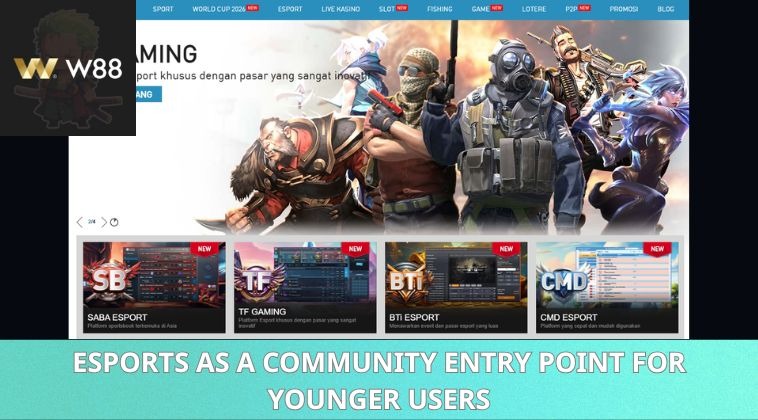
Esports betting communities are active, vocal, and deeply engaged with the events they follow. When a bookmaker covers those markets seriously — not as a token addition but with competitive lines and consistent scheduling — it earns credibility with an audience that’s otherwise hard to reach. W 88 has built that credibility in esports circles gradually over the past several years.
Consistent Withdrawal Processing Creates Advocates
Satisfied users talk. Frustrated users talk louder.
The withdrawal experience is where betting operators most often damage their community standing. A delayed payout gets shared. A withheld withdrawal gets amplified. W 88’s track record on this front — verified accounts processing within 24 hours in most cases — has generated the kind of positive word-of-mouth that no marketing spend can replicate.
Reference: https://w88zoro.com/
Honestly, this single operational detail is probably responsible for more organic community growth than any promotion W 88 has ever run. Users who’ve had withdrawal experiences go smoothly recommend the bookmaker specifically on that basis. And that recommendation lands differently coming from a peer than it does coming from an affiliate review.
The Loyalty System And What It Actually Does For Retention
Points programs are easy to dismiss as retention gimmicks. Most of the time that dismissal is fair. But the structure of W 88’s loyalty system reflects something meaningful about how the actual user base behaves.
Points accumulate across all product categories — sports, casino, and poker activity all contribute to the same system. A user who bets on football during the weekend and plays live casino on weekday evenings earns from both. That cross-product structure matters because it mirrors how engaged users actually use the service rather than forcing them into a single category to maximize rewards.
W 88 also runs event-tied promotions throughout the year — tied to football seasons, major boxing cards, and regional tournaments. These cycle predictably enough that established users can anticipate them. That predictability creates a rhythm of re-engagement that keeps the community active between major events rather than going dormant.
How Regional Access Shapes Community Behavior
Users in Vietnam, Thailand, and the Philippines interact with W 88 within a regional context that shapes how the community operates. ISP-level domain restrictions are a recurring reality across Southeast Asia for betting services. W 88 maintains mirror links and alternative access points that get shared within communities as they’re needed.
That information-sharing behavior is itself a form of community function. When a primary domain is temporarily restricted, users who know the alternatives share them in group chats and forums. This keeps the community operational and simultaneously reinforces the value of being connected to other users rather than navigating access issues alone.
It’s not a feature W 88 designed intentionally. But it’s a community dynamic that has developed naturally from the operational context, and it adds a layer of interdependence that keeps users in contact with each other.
Support Interactions And Their Effect On Community Sentiment
Support experiences get shared more than almost any other aspect of a betting service. A slow or unhelpful response generates immediate and visible community feedback. A fast, useful response occasionally gets mentioned positively.
W 88’s live chat support handles standard queries — transaction questions, bonus clarifications, account issues — within a few minutes during active hours. More complex disputes take longer and sometimes require escalation. That pattern is consistent across user reports and broadly in line with what similarly sized operators manage.
Where community sentiment benefits is in the consistency. Users who know what to expect from a support interaction navigate it more effectively and come away less frustrated than those dealing with unpredictable response quality. Predictable support, even if imperfect, generates less negative community noise than erratic support that occasionally exceeds expectations.
Conclusion
W 88 builds a strong player community through a combination of factors that are individually modest but collectively meaningful. A sports product that gives experienced bettors something worth discussing. Withdrawal processing that generates genuine positive word-of-mouth. A loyalty system that matches how users actually behave rather than how a marketing team would prefer them to behave. Regional community dynamics that encourage peer connection. Support that’s predictable enough to navigate without frustration.
None of these are dramatic community-building initiatives. They’re operational standards that, when maintained consistently over a long period, produce an audience that stays and talks. In a market where most users are skeptical by default, that kind of earned community engagement is genuinely difficult to build — and even harder to replace once lost.